
How Many Hours of Sleep Do 2 Year Olds Need? A Complete Guide
Understanding Sleep Needs in Early Childhood
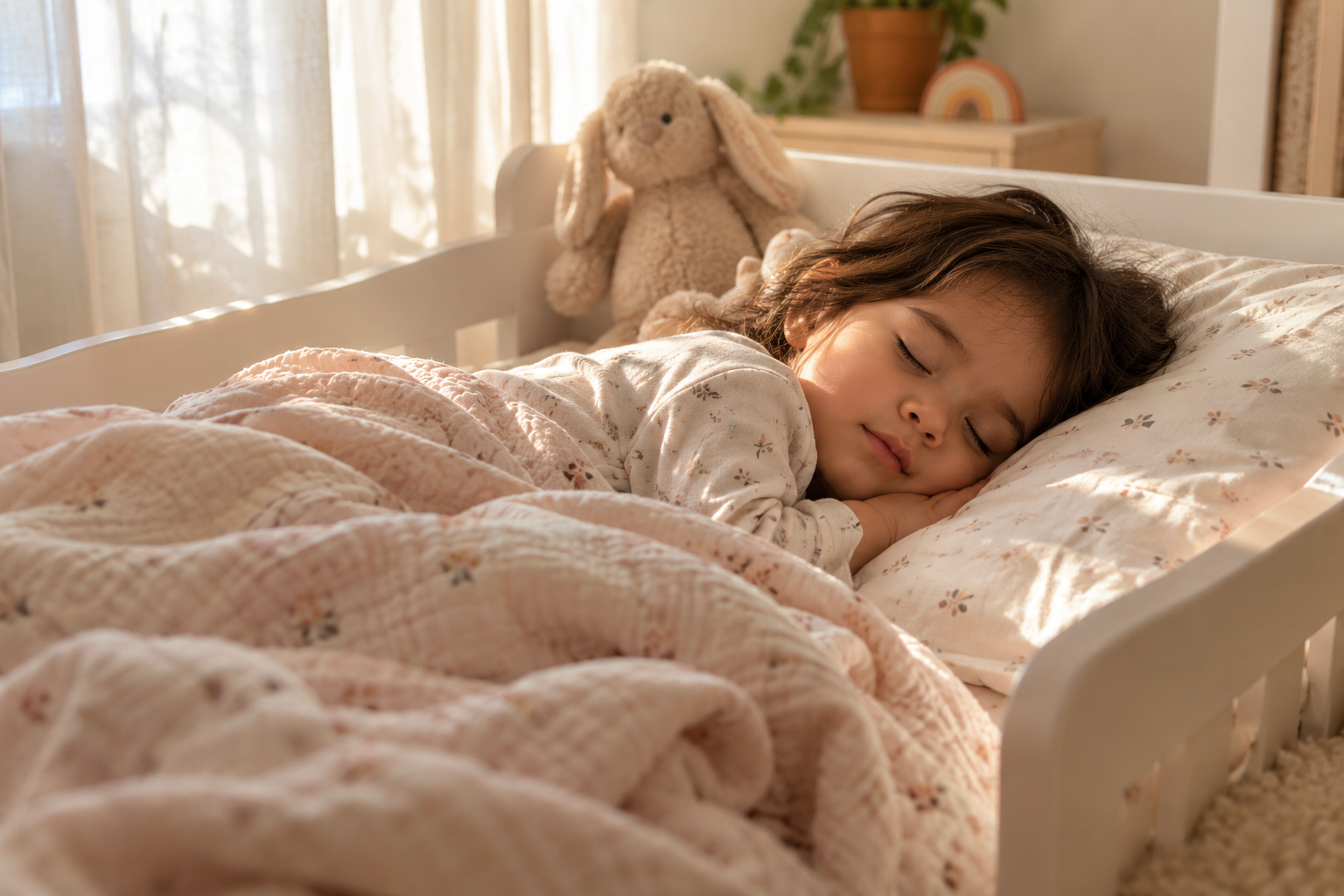
Sleep plays a foundational role in a toddler's development, supporting everything from brain growth to emotional regulation. During the toddler years, your child's brain forms new neural connections at a remarkable pace, and much of this development happens specifically during sleep. Because this stage involves such rapid growth, insufficient sleep can affect far more than just mood, influencing memory, language development, and even physical growth.
Toddlers also experience significant changes in their sleep architecture around age two, since the amount of deep sleep and REM sleep shifts as their brains mature. This transition explains why sleep needs at this age look different from both the infant stage and the preschool years that follow. Understanding these underlying changes helps explain why getting the right amount of sleep matters so much during this specific window of development.
Because sleep needs evolve constantly throughout early childhood, staying informed about your toddler's current requirements, rather than relying on outdated guidance from the infant stage, helps you support their development more effectively.
How Many Hours of Sleep Do 2 Year Olds Need? The General Answer
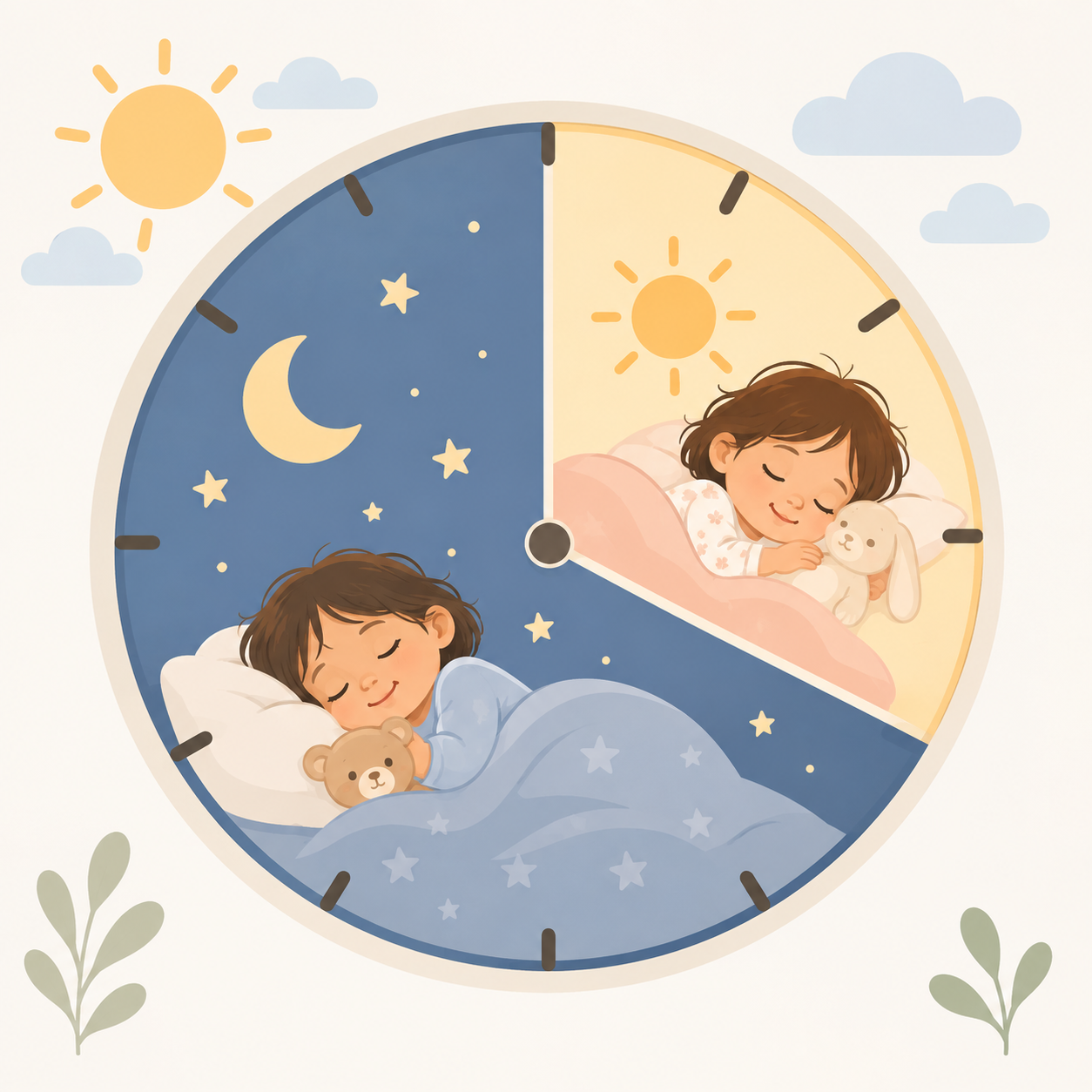
Most 2 year olds need between eleven and fourteen hours of total sleep across a full twenty-four hour period, according to guidelines from the American Academy of Pediatrics and the National Sleep Foundation. This total typically breaks down into around ten to twelve hours of nighttime sleep, combined with one to three hours of daytime napping, usually taken as a single afternoon nap at this age.
Because this range spans several hours, your toddler's exact need may fall anywhere within it, depending on their individual temperament, activity level, and overall development. Some 2 year olds function well on the lower end of this range, while others clearly need closer to fourteen hours to feel their best throughout the day.
Rather than fixating on an exact number, use this range as a helpful benchmark, then pay close attention to your own child's mood, behavior, and energy levels to determine where they fall within it.
Breaking Down Nighttime Sleep Versus Naptime Sleep
Nighttime sleep typically makes up the larger portion of a 2 year old's total rest, usually spanning ten to twelve hours if your toddler goes to bed between 7:00 and 8:00 in the evening and wakes between 6:30 and 7:30 the following morning. This extended nighttime stretch supports the deep, restorative sleep stages that play such a critical role in physical and cognitive development.
Daytime napping fills in the remaining sleep need, and most 2 year olds still take one nap lasting one to three hours in the early afternoon. Because this single nap replaces the multiple shorter naps common during infancy, the timing and length of this rest period significantly influences how well your toddler sleeps that same night.
If your toddler's nap runs too long or starts too late in the afternoon, this can push nighttime sleep later or make it harder for them to fall asleep at their usual bedtime. Therefore, keeping the nap contained within a reasonable window, generally ending by 3:00 in the afternoon, helps protect the quality of nighttime sleep as well.
Why Total Sleep Need Varies by Child
Although the eleven to fourteen hour range applies to most 2 year olds, individual variation remains completely normal. Genetics play a meaningful role in determining your toddler's baseline sleep need, so a child with parents who naturally need less sleep may also require slightly less themselves. Activity level throughout the day also influences sleep need, since a highly active toddler often requires more recovery sleep than one with a calmer daily routine.
Temperament matters too, since some toddlers naturally wind down and fall asleep quickly, while others need more time and support to settle, even when equally tired. Because of these individual differences, comparing your toddler's sleep total strictly against another child's schedule rarely provides useful information.
Instead, focus on your own toddler's patterns over time, since consistency within your child's own range matters far more than matching a specific number exactly.
Signs Your 2 Year Old Is Getting Enough Sleep
Beyond tracking hours, several behavioral signs confirm your toddler receives adequate rest. A well-rested 2 year old typically wakes up in a relatively pleasant mood, falls asleep within about twenty minutes of bedtime, and maintains steady energy throughout the day without extreme highs and lows. Additionally, a toddler getting enough sleep usually shows fewer meltdowns overall, since fatigue often intensifies emotional reactions at this age.
Consistent daytime alertness also signals adequate sleep, since an overtired toddler often appears either unusually hyperactive or excessively clingy rather than simply sleepy. Because these signs can feel subtle day to day, tracking your toddler's mood and behavior patterns over a week or two often reveals a clearer picture than judging based on a single day alone.
Signs of Sleep Deprivation in Toddlers
On the other hand, several signs suggest your 2 year old may not be getting enough sleep. Frequent meltdowns, difficulty transitioning between activities, and excessive clinginess often point toward accumulated sleep debt rather than a purely behavioral issue. Similarly, a toddler who seems wired or unusually hyper in the evening may actually be overtired, since exhaustion at this age frequently produces a burst of adrenaline rather than obvious sleepiness.
Frequent illness can also indicate insufficient sleep, since sleep plays a significant role in supporting a healthy immune system. Additionally, if your toddler regularly falls asleep within minutes in the car or stroller during the day, this often signals that their nighttime or nap sleep is falling short of what their body actually needs.
Because these signs sometimes get mistaken for typical toddler behavior, recognizing sleep deprivation as a possible root cause helps you address the actual problem rather than just managing the symptoms.
How Nap Transitions Affect Total Sleep at This Age
Around age two, many toddlers still rely heavily on their single afternoon nap to reach their full sleep total, though some children begin showing early signs of nap resistance during this stage. Because dropping the nap too early can make it nearly impossible to reach the full eleven to fourteen hour sleep range through nighttime sleep alone, most sleep experts recommend protecting the nap for as long as your toddler genuinely needs it, often well past their third birthday.
If your 2 year old begins resisting their nap occasionally, this does not necessarily mean they are ready to drop it entirely. Instead, occasional nap resistance often reflects a temporary phase, developmental leap, or minor schedule disruption rather than a permanent shift. Continuing to offer quiet, restful time even on days when your toddler does not fall asleep helps protect their overall sleep total during this transitional period.
Building a Sleep Schedule That Meets This Need
Creating an effective schedule starts with your toddler's typical wake time, then working backward to ensure they reach their full eleven to fourteen hour sleep need. For example, a toddler who wakes at 7:00 in the morning might follow a schedule with a 12:30 to 2:30 afternoon nap, followed by a 7:30 bedtime, which comfortably provides around thirteen total hours of sleep.
Because consistency supports healthy sleep patterns so strongly, keeping wake time, nap time, and bedtime within a similar window every day, including weekends, helps regulate your toddler's internal body clock. Additionally, building a calming pre-nap and pre-bedtime routine reinforces these sleep cues, making it easier for your toddler to settle quickly at each sleep period throughout the day.
If your current schedule consistently falls short of your toddler's sleep need, consider adjusting bedtime earlier first, since an earlier bedtime often resolves sleep deficits more effectively than a later wake time or an extended nap.
Common Sleep Disruptors for 2 Year Olds
Several common disruptors can temporarily interfere with your toddler's sleep total, even with a solid schedule in place. Teething, particularly the emergence of molars around this age, often causes temporary discomfort that disrupts both naps and nighttime sleep. Separation anxiety also frequently intensifies around age two, sometimes leading to increased night wakings or resistance at bedtime.
Developmental leaps, such as significant language growth or new physical skills, can also temporarily disrupt sleep patterns, since your toddler's brain stays busy processing new abilities even during rest. Because most of these disruptions resolve within one to two weeks, maintaining your regular schedule and routine as consistently as possible usually helps your toddler return to their baseline sleep pattern more quickly.
When to Seek Professional Support
If your 2 year old consistently falls well below the eleven to fourteen hour range despite a consistent schedule and routine, professional support can help identify what specific factors might be interfering with their sleep. A sleep consultant evaluates your toddler's full schedule, environment, and behavior patterns, then builds a personalized plan that addresses the root cause rather than just the symptoms.
Because persistent sleep shortfalls can affect mood, behavior, and development over time, addressing the issue sooner rather than later often prevents these challenges from compounding. If you have tried consistent adjustments for several weeks without meaningful improvement, reaching out for guidance is a reasonable and often very effective next step.
Conclusion: Supporting Your Toddler's Full Sleep Need
So, how many hours of sleep do 2 year olds need? Most toddlers this age require between eleven and fourteen hours across a full day, typically split between ten to twelve hours overnight and one to three hours during an afternoon nap. Because individual needs vary, use this range as a guide while paying close attention to your own child's mood, energy, and behavior for the clearest picture of whether they are getting enough rest.
With a consistent schedule, a protected nap, and a calming routine at both nap time and bedtime, most 2 year olds settle comfortably into a rhythm that meets their full sleep need. Trust the process, stay consistent through temporary disruptions, and reach out for support if your toddler's sleep consistently falls short despite your best efforts.
Frequently Asked Questions (FAQ)
-
Most 2 year olds need between ten and twelve hours of nighttime sleep, which combines with one to three hours of daytime napping to reach their full eleven to fourteen hour daily total.
-
Occasional shorter sleep totals can happen during travel, illness, or developmental leaps, but if your toddler consistently sleeps less than eleven hours for several weeks, consider reviewing their schedule or consulting a pediatrician.
-
Yes, most 2 year olds still need one afternoon nap lasting one to three hours, since dropping the nap too early often makes it difficult to reach their full daily sleep requirement through nighttime sleep alone.
-
A bedtime between 7:00 and 8:00 in the evening, paired with a morning wake time between 6:30 and 7:30, typically allows most 2 year olds to reach their full ten to twelve hour nighttime sleep need.
-
Watch for frequent meltdowns, excessive clinginess, hyperactivity in the evening, or falling asleep quickly in the car during the day, since these signs often indicate your toddler needs more total sleep.
-
Sleeping significantly more than fourteen hours regularly is less common, but if this pattern appears alongside low energy or other concerning symptoms, mention it to your pediatrician to rule out any underlying issues.
Ready to Build a Sleep Schedule That Actually Works?
Understanding your toddler's sleep needs is the first step, and a personalized plan makes reaching that goal far easier. Sleep Child O' Mine offers gentle, evidence-based toddler sleep coaching designed around your child's exact age and temperament.
Visit Sleep Child O' Mine today to build a sleep schedule your 2 year old, and your whole family, can thrive on.
