

Your baby finally slept in longer stretches, and you started to feel human again. Then, around the fourth month, everything changed. Suddenly your little one wakes every hour, fights naps, and refuses to settle without help. If this sounds familiar, you have probably met the 4 month sleep regression. Take a deep breath, because you are not failing, and your baby is not broken. This phase reflects a real and permanent shift in how your baby sleeps, and you can handle it with patience and gentle strategies. This guide explains what happens, how long it lasts, and what you can do to protect your family's rest.
What Is the 4 Month Sleep Regression?
The 4 month sleep regression describes a sudden change in sleep patterns that usually appears between 3 and 5 months of age. Babies who previously slept well begin waking more often at night, napping in short bursts, and needing more help to fall asleep.
Although parents call it a regression, many sleep experts prefer the term "progression." The change shows that your baby's brain is maturing, not going backward. In other words, your baby is developing more adult-like sleep, and that development takes some adjusting.
Importantly, the name can mislead you, because the change does not strike every baby on the same day. Some babies shift at 12 weeks, while others take until 20 weeks. Furthermore, some babies barely seem to notice it at all.
Why It Happens: How Baby Sleep Cycles Change
To understand the 4 month sleep regression, you first need to understand sleep itself. Every person moves through cycles of light sleep and deep sleep during the night, and each cycle includes several stages.
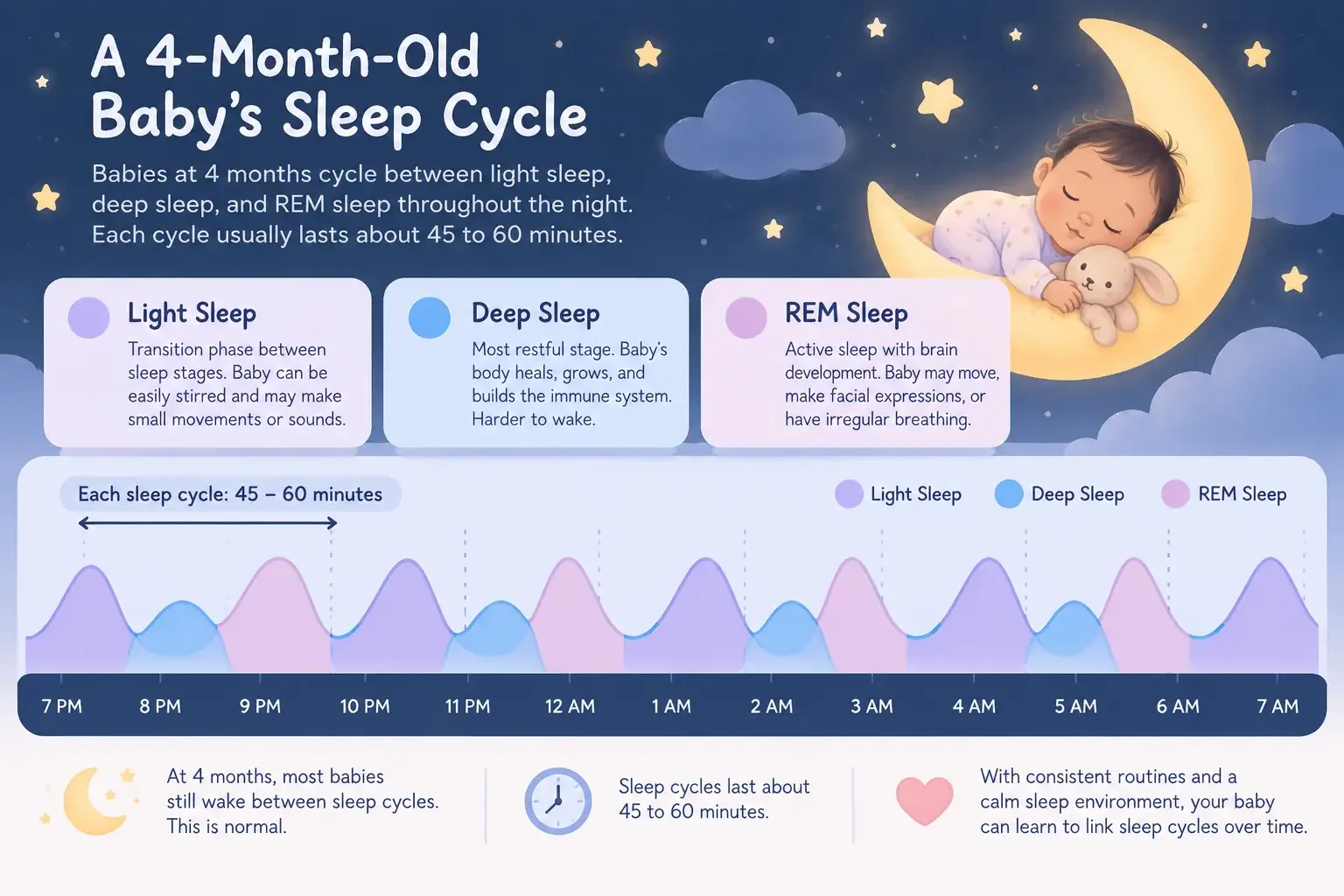
Newborns sleep in a simple pattern. They fall into deep sleep quickly and spend about half their sleep in active, or REM, sleep. Because their sleep stays fairly consistent, they often doze through noise and movement.
Around 4 months, however, a baby's sleep architecture matures. Their sleep cycles begin to resemble ours, with distinct stages of light sleep, deep sleep, and REM sleep. Each cycle lasts roughly 45 to 60 minutes, which is shorter than an adult cycle. As a result, your baby now surfaces into light sleep every hour or so.
Here is where trouble begins. Between cycles, everyone wakes briefly. Adults roll over and drift back to sleep without noticing. Babies, on the other hand, may not yet know how to link cycles on their own. If a baby falls asleep while rocking or feeding, they expect the same conditions when they stir, and they cry out for help.
This shift is permanent. Your baby will not go back to newborn sleep, so the goal is to help them learn to connect cycles in their new way of sleeping.
Common Signs of the 4 Month Sleep Regression
Not every baby shows the same signs, so watch for several clues together. Parents often report the following changes.
First, your baby wakes more often at night. A baby who slept a five-hour stretch may suddenly wake every one to two hours. Second, naps shrink. Many babies take 30 to 45 minute naps, which equals one sleep cycle, and then wake up cranky. Third, bedtime becomes a struggle. Your baby may fuss, cry, or resist settling even when they look tired.
In addition, you may notice more daytime fussiness and a growing appetite. Many babies also become more distracted during feeds, because the world around them suddenly looks fascinating. Meanwhile, new skills such as rolling, grasping, and babbling can add to the restlessness.
How Long Does the 4 Month Sleep Regression Last?
Most families see this phase last two to six weeks. However, the exact length depends on your baby's temperament, your routine, and how you respond to night waking.
Because the underlying change is permanent, the sleep does not simply bounce back by waiting. Some babies learn to link cycles naturally, and sleep improves on its own. Other babies need gentle guidance. If you keep helping your baby fall asleep in the same way every time, the pattern may continue for months.
Therefore, the best strategy combines patience with small, consistent changes that build your baby's independent sleep skills.
Rule Out Other Causes First
Before you assume it is the 4 month sleep regression, check for other possible causes of poor sleep. Several common issues can look similar.
Illness, such as a cold or ear infection, can disrupt sleep. Teething can cause discomfort, although it often starts a bit later. Growth spurts increase hunger and may lead to extra night feeds. Likewise, a change in routine, travel, or a new child care arrangement can unsettle your baby.
If your baby shows a fever, pulls at their ears, refuses to feed, or seems unusually fussy, call your pediatrician. A professional can rule out medical issues and give you peace of mind.
How to Survive the 4 Month Sleep Regression
Once you understand what is happening, you can respond with confidence. These gentle strategies help you protect everyone's rest.
Build a Consistent Bedtime Routine
Babies feel safer when they know what comes next. Create a short routine of about 20 minutes, such as a bath, pajamas, feeding, a book or song, and a goodnight cuddle. Do the same steps in the same order every night. As a result, your baby learns to link the routine with sleep, and settling becomes easier.
Practice Putting Your Baby Down Drowsy but Awake
Independent sleep begins with practice. Whenever you can, place your baby in the crib while they feel sleepy but still awake. This gives them a chance to experience falling asleep in the place where they will wake up. Some nights it will work, and some nights it will not, and both outcomes are normal. Keep trying without pressure.
Watch Awake Windows
At 4 months, most babies can handle roughly 1.5 to 2 hours of awake time between naps. An overtired baby fights sleep harder, so watch for yawns, eye rubbing, and staring off. Offer sleep at the first sign of tiredness rather than waiting for a meltdown.
Protect the Sleep Environment
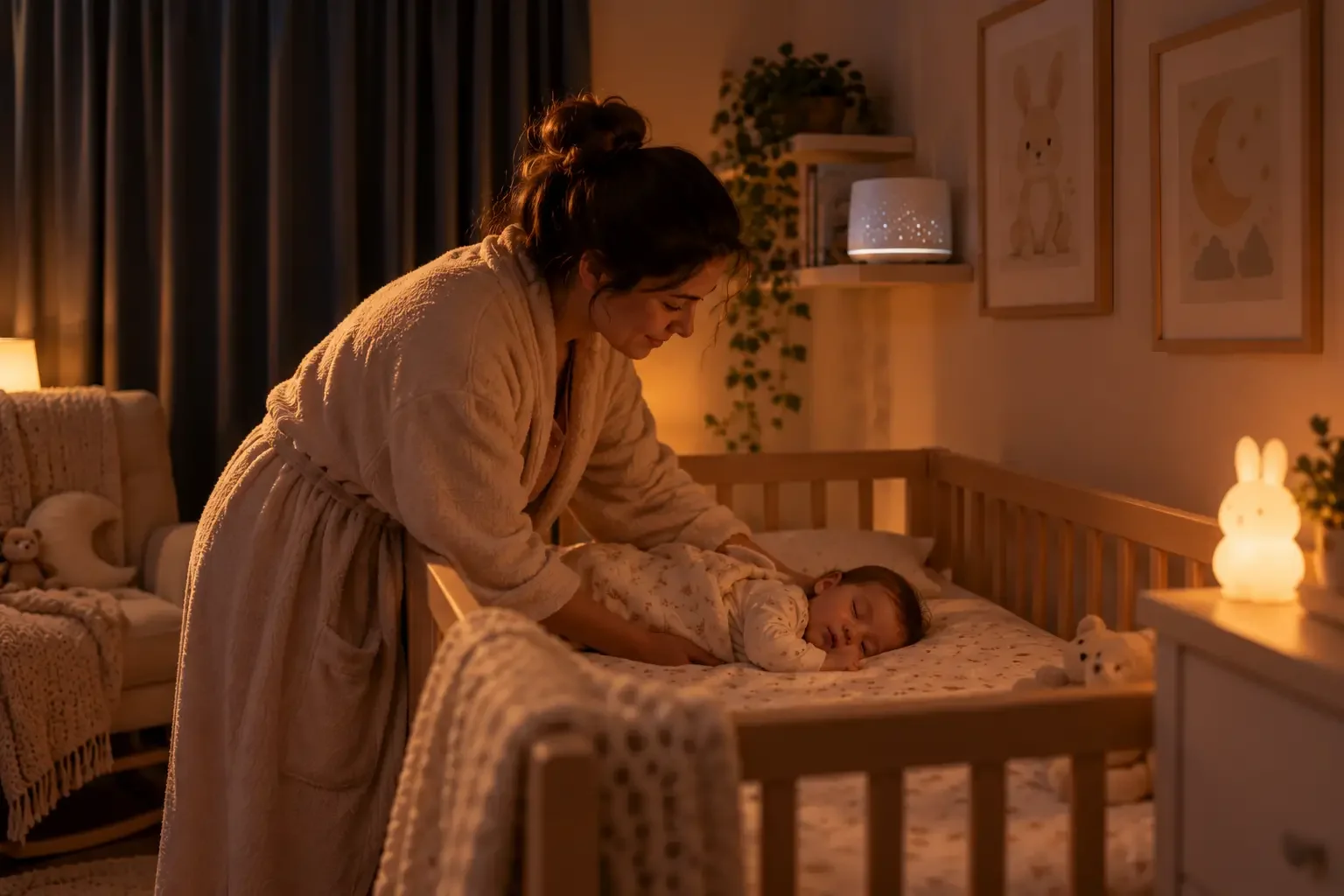
A dark, quiet, and comfortable room makes it easier for your baby to link cycles. Use blackout curtains, run a white noise machine, and keep the room at a comfortable temperature. In addition, follow safe sleep guidelines: place your baby on their back, on a firm, flat surface, with no loose blankets, pillows, or toys in the crib.
Give Your Baby Time to Resettle
When your baby stirs at night, pause for a minute or two before you respond. Babies often make noise as they move between cycles, and many resettle without help. If your baby cries, respond calmly and offer the least amount of support needed. Over time, this approach teaches them that they can handle small wake-ups on their own.
Fill Up Daytime Feeds and Activity
A baby who eats well and plays actively during the day sleeps better at night. Offer full feeds, give plenty of tummy time, and take a daily walk outside for natural light. Because babies at this age are distractible, feed in a quiet room if your baby keeps pulling off the breast or bottle.
Habits to Approach Carefully
During the 4 month sleep regression, tired parents often reach for quick fixes. Some of these can create new challenges later.
Many parents begin offering extra feeds at every wake-up, even when their baby does not seem hungry. While night feeds remain normal at this age, feeding every hour can create a habit that is hard to break. Instead, check whether your baby really needs food, and try other forms of comfort first.
In a similar way, relying on rocking, bouncing, or feeding to sleep for every nap can make independent sleep harder to learn. You do not need to stop these comforts entirely, but try to mix in opportunities for your baby to settle on their own.
Finally, avoid sleep products that do not follow safe sleep guidelines, such as inclined sleepers, loose blankets, or bumper pads. Safety always comes first, even when you feel desperate for rest.
Is It Time to Start Sleep Training?
Many families ask whether 4 months is a good time for formal sleep training. Most sleep experts suggest waiting until at least 4 to 6 months, and many recommend checking with your pediatrician first. Babies develop at different speeds, and every family has different goals.
If you decide to begin, you can choose a gentle approach that fits your values. Gradual methods, such as gentle fading, offer comfort while building independent sleep skills. Our article on gentle sleep training methods that skip cry-it-out explains several options you can try.
Take Care of Yourself, Too
Sleep loss affects parents deeply, so you need support during this phase. Share night duties with your partner or a trusted helper. Rest when your baby rests, even if you only close your eyes for 20 minutes. Accept help with meals, laundry, and errands. Moreover, remember that this season will pass.
If the exhaustion feels overwhelming, or if you notice persistent sadness, anxiety, or hopelessness, talk to your healthcare provider. Postpartum mood changes are common, and support is available.
Conclusion
The 4 month sleep regression feels exhausting, but it also signals healthy brain development. Your baby is learning to sleep in a more mature way, and with patience, routine, and gentle support, they can learn to link sleep cycles. Build a calming bedtime routine, protect the sleep environment, watch awake windows, and give your baby space to practice. Most importantly, be kind to yourself. You are doing a hard job, and better nights are on the way.
Frequently Asked Questions (FAQ)
-
Most babies show changes between 3 and 5 months, with many starting around 16 weeks. The timing varies, and some babies move through it with very little disruption.
-
It usually lasts two to six weeks. However, because the change in sleep cycles is permanent, some babies need gentle guidance to link cycles and return to longer stretches.
-
Your baby now cycles through light and deep sleep roughly every 45 to 60 minutes. If your baby falls asleep with help, such as rocking or feeding, they may call for the same help every time they stir between cycles.
-
Many experts recommend waiting until your baby is at least 4 to 6 months old and checking with your pediatrician first. Meanwhile, you can build healthy habits such as a routine and drowsy-but-awake practice without starting a formal method.
-
Most 4 month olds take three to four naps per day, with awake windows of about 1.5 to 2 hours. Naps often last 30 minutes to two hours, and the pattern varies widely between babies.
-
Call your pediatrician if your baby has a fever, trouble breathing, poor feeding, unusual fussiness, or if sleep problems last longer than a few weeks. A doctor can rule out illness and offer guidance.
Ready to Get Your Nights Back?
You do not have to survive sleep regressions alone. Sleep Child O' Mine offers gentle, evidence-based, nonjudgmental sleep coaching designed around your baby's age, temperament, and your family's goals. We guide parents through every stage, from newborn nights to toddler bedtimes, with calm and practical support.
Visit Sleep Child O' Mine today to learn how personalized coaching can bring more rest to your home. You are not failing. You are just exhausted, and we are here to help.
